Monday, May 08, 2006

Our final proposal investigated the manner in which the infrastructure of buildings are dealt with. In short, we propose to adjust the condition by no longer hiding the unseen operations, but rather masking it; in such a way that it maintains the usual manner of work but gains better access and relationship between the building, those who occupy, and the infrastructure.


Sunday, May 07, 2006
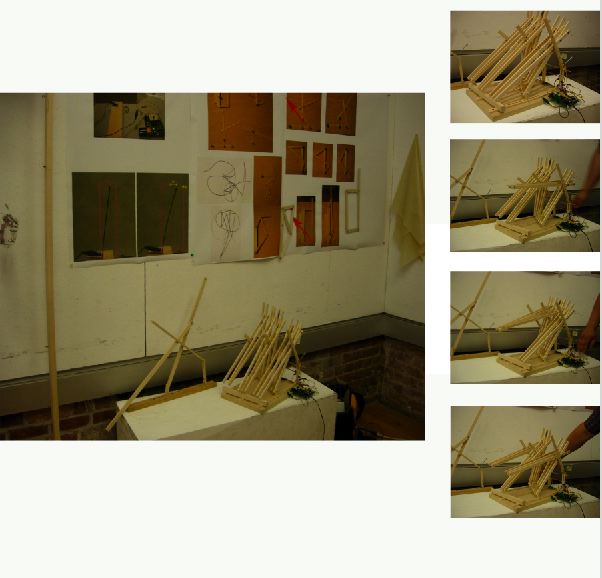
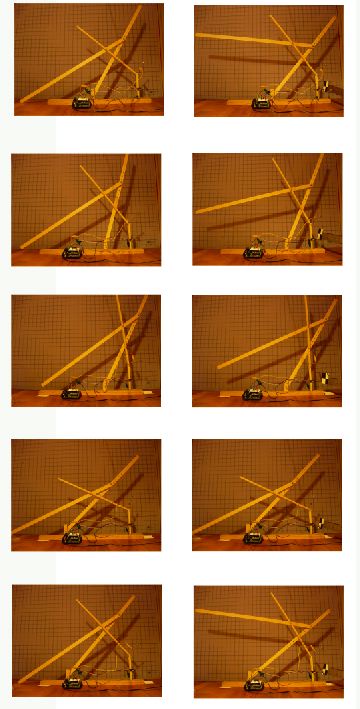

Final proposal is really a step leading to another. The building of any object, regardless of if it already exists, allows for the possibility to spring board into a new direction. If there is any one thing to be learned it is the sharpening of the skill which allows us to envision with greater clarity a intended proposal. In such a manner is this class in the process of design. My initial steps came from personal interests and experience in answering the conclusions found from the two early flexinol prototypes. This early initiation can be viewed as a either intuition or a misstep. However, in the finality of a class such as this the real beauty is in the variation of proposals from the class. In that exposure we individually will hopefully retrace our initial steps and question those choices for the next proposed problem. In that, my point would be that for prospective students to initially think of this class as an extension of where technics leaves off and begin by researching not a final object to propose but what in essense you are building for. The most useful criticism to be bought forward in this class was "The what for ?" or "What to build next?"and especially the "So what" aspect. The world is full of useless from concept trinkit objects, do not create any futher disposable objects.

Friday, May 05, 2006

Troubleshooting


1) Micro controller circuit wiring

very importaint to get this right, if you are having trouble consider the following ---

a) Transistor is exactly (2n 3904) and is positioned forwards (ground and output go to the appropiate places)
b) You must use electronic breadboard wires, or 22 gauge wire as a subststute.
c) Controller limits power to 5v, sometimes you need a 4 pack AA battery holder as an alternative to up voltage for some wires to actuate to its full potential
d) sensor wires are as follows --- red = power --- black = ground --- white = port


2) counterforce

muscle wire is only so strong --- too much counter force and the wire will not shorten --- will stay stretched. not enough counterforce, the wire will not always return. wire only shortenes 10 - 12% and a few pounds of force --- design accordingly.

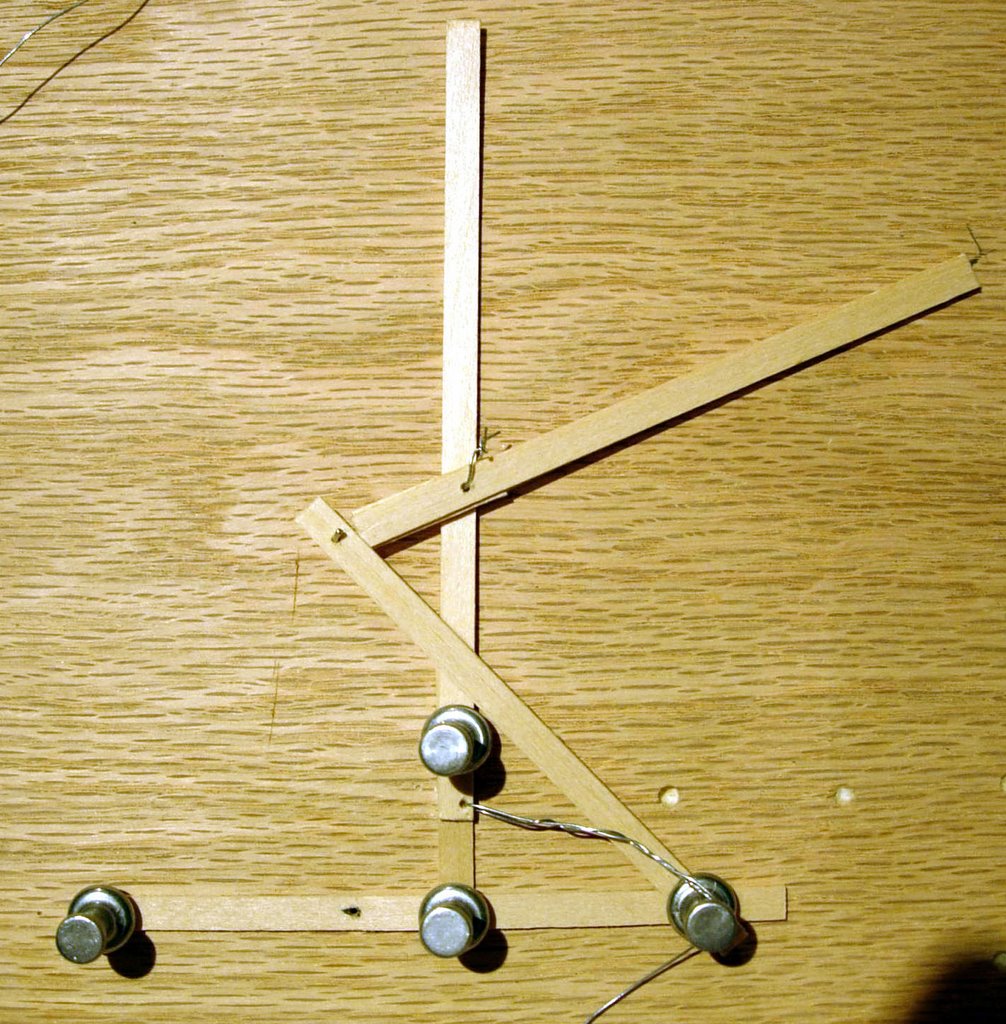
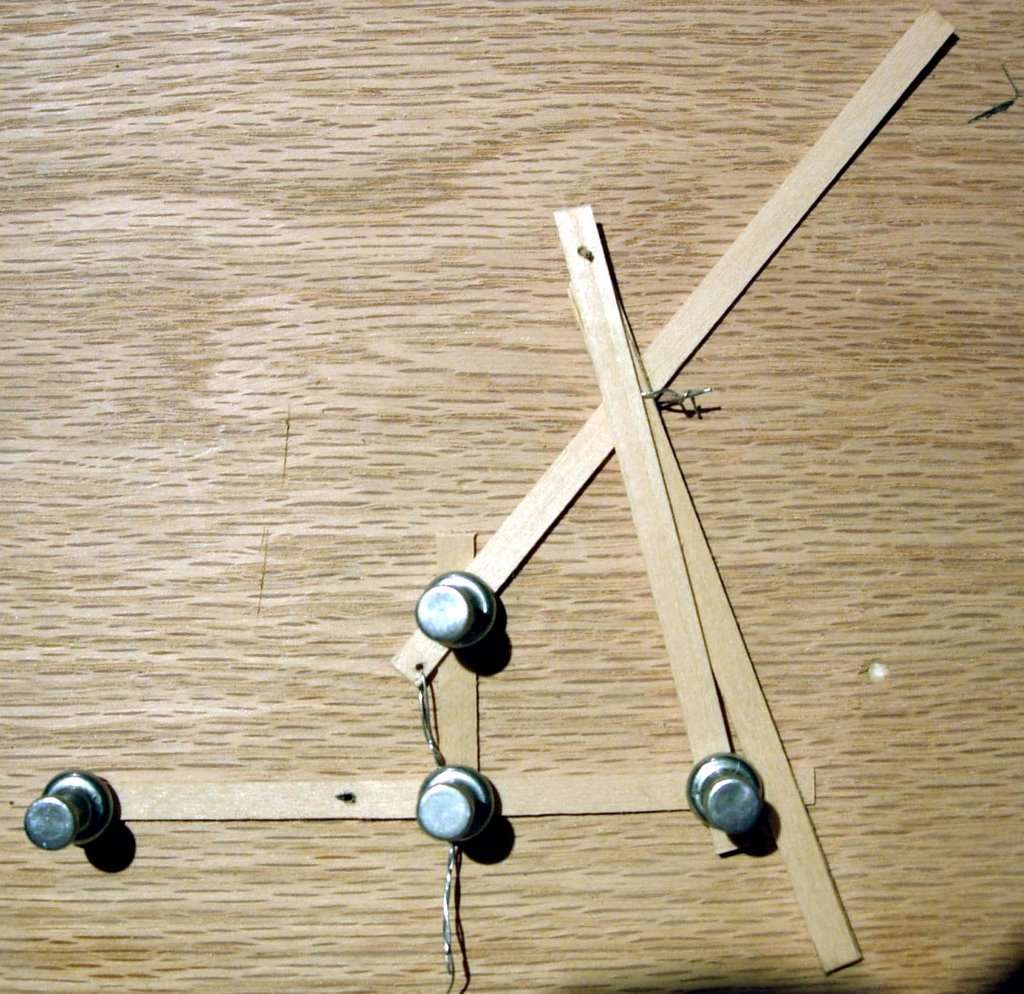
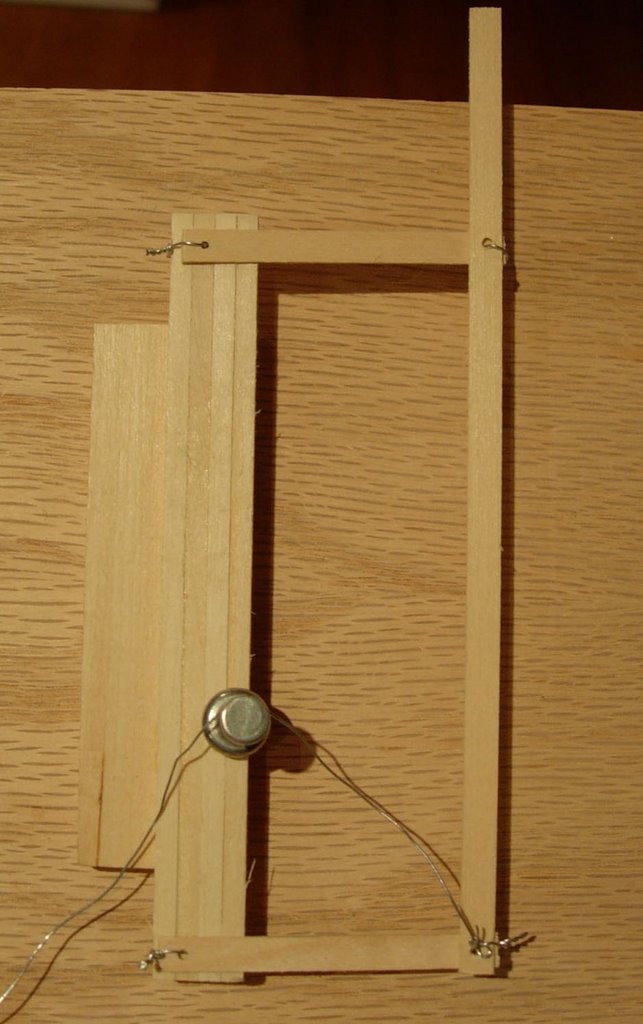
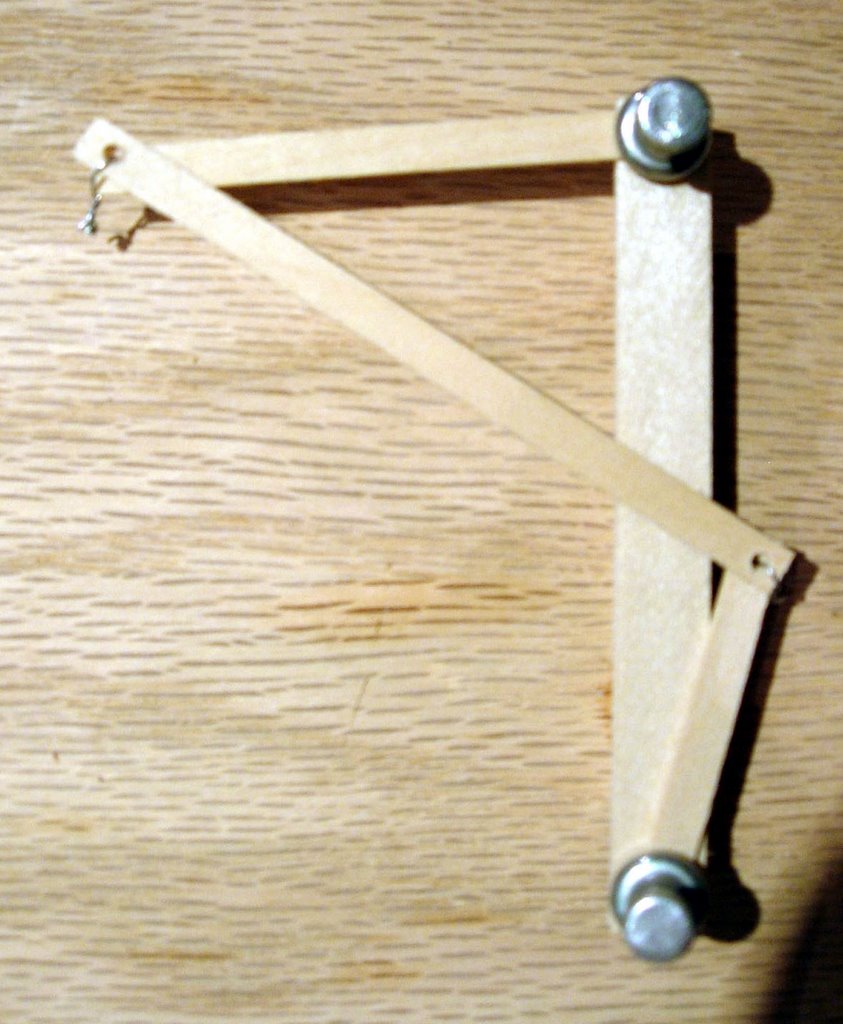
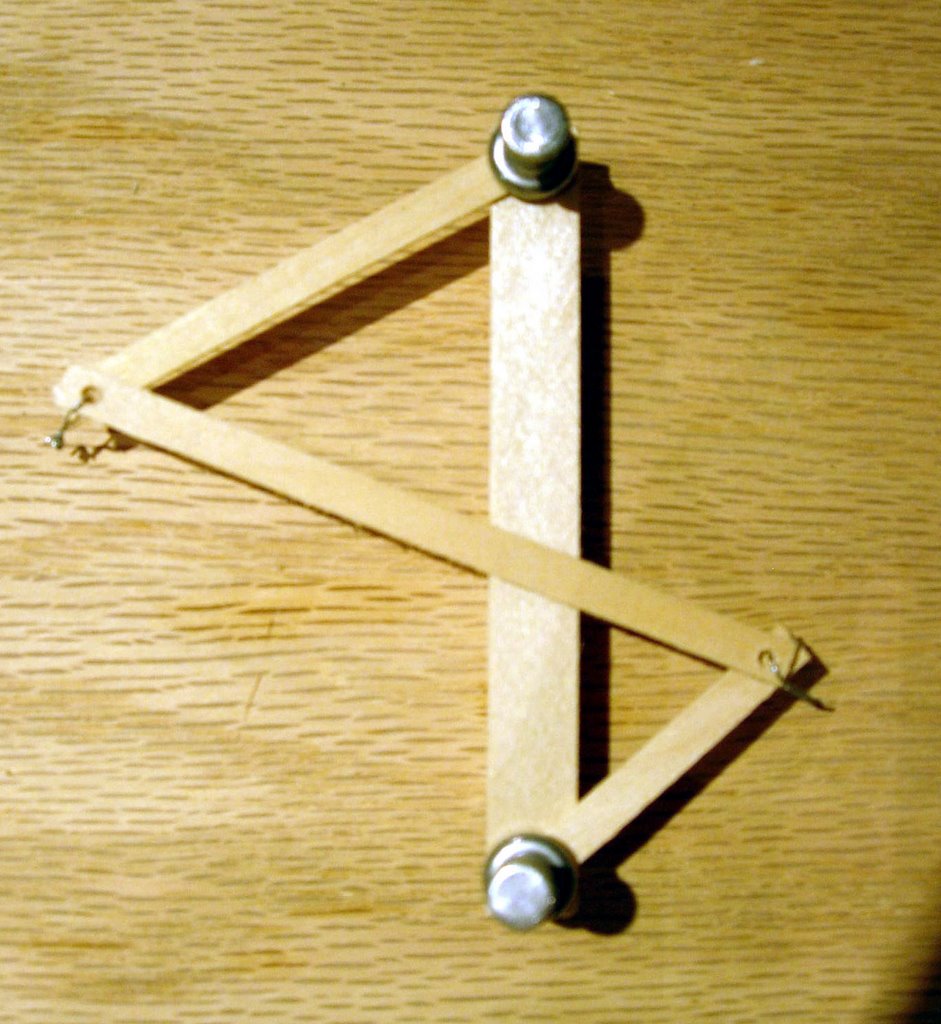
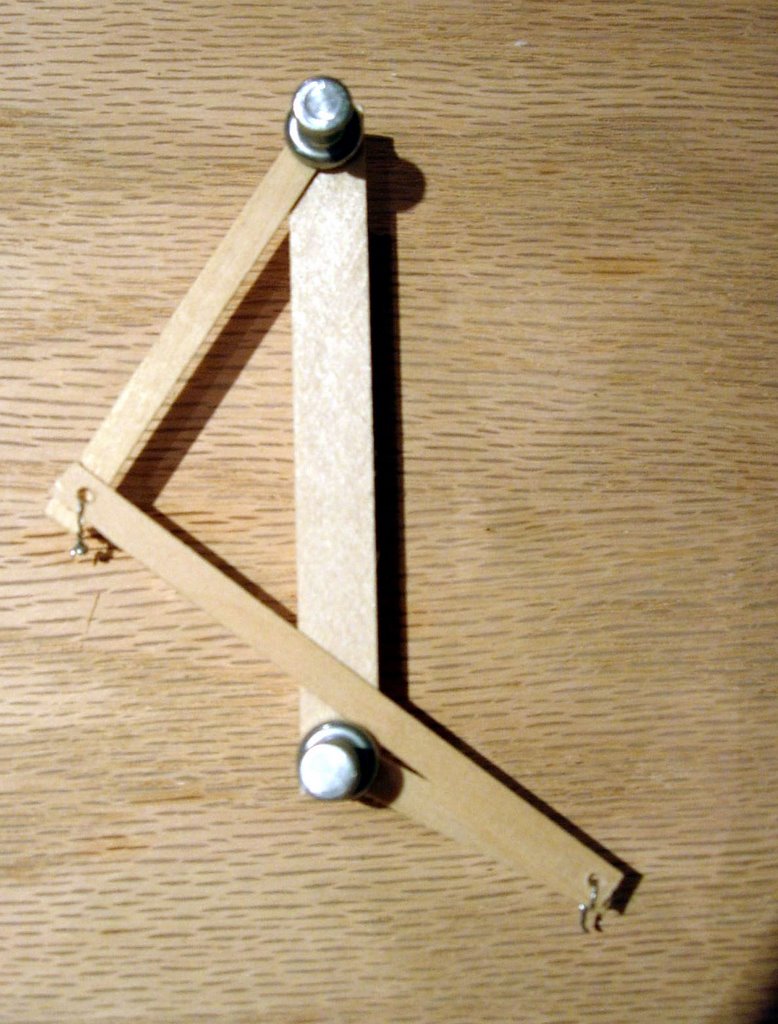
For membranes, if wire is flat against a mambrane, it will try to compress the membrane, and not pull it outward (see images below) so pre positioning and pre stressing youre membrane is key

- Jesse Porter

Thursday, May 04, 2006

Millmaster and uncle rod would like to share some codes with subroutines and counters. Subroutines let you specify a chunk of code and using it in multiple parts without re-writing. Counters let you rerun a portion of code ( the subroutines in this case) a finite number of times, freeing you code writers up from rewriting all the highs and lows and whatnot for those long repeptitive codes. Your all welcome.

MillMaster

' {$STAMP BS2}
' {$PBASIC 2.5}DO

Main:
counter VAR Nib

FOR counter = 1 TO 3
GOSUB A

A:
DEBUG ? counter
HIGH 15
PAUSE 1000
LOW 15
PAUSE 1000

NEXT

FOR counter = 4 TO 6
GOSUB B

B:
DEBUG ? counter
HIGH 15
PAUSE 500
LOW 15
PAUSE 500

NEXT

FOR counter = 7 TO 9
GOSUB C

C:DEBUG ? counter
HIGH 15
PAUSE 100
LOW 15
PAUSE 100

NEXT

DEBUG ? counter
DEBUG "Done!"

LOOP

Tuesday, May 02, 2006

TIP: MULTIPLE SENSOR CODE

Here is code to make 8 sensors and 8 Flexinol wires work simultaneously:

'{$STAMP BS2}
'{$PBASIC 2.5}

DIR0 = 1
S0 VAR Bit
DIR2 = 1
S2 VAR Bit
DIR4 = 1
S4 VAR Bit
DIR6 = 1
S6 VAR Bit
DIR8 = 1
S8 VAR Bit
DIR10 = 1
S10 VAR Bit
DIR12 = 1
S12 VAR Bit
DIR14 = 1
S14 VAR Bit

Start:
FREQOUT 0,1,38500 'sends out signal to IR LED
S0 = IN0 'Stores reply
DEBUG 0,"SENSOR0 = ",DEC S0, CR 'displays the
results
IF S0 = 0 THEN
HIGH 1
ENDIF

FREQOUT 2,1,38500 'sends out signal to IR LED
S2 = IN2 'Stores reply
DEBUG 2,"SENSOR2 = ",DEC S2, CR 'displays the
results
IF S2 = 0 THEN
HIGH 3
ENDIF

FREQOUT 4,1,38500 'sends out signal to IR LED
S4 = IN4 'Stores reply
DEBUG 4,"SENSOR4 = ",DEC S4, CR 'displays the
results
IF S4 = 0 THEN
HIGH 5
ENDIF

FREQOUT 6,1,38500 'sends out signal to IR LED
S6 = IN6 'Stores reply
DEBUG 6,"SENSOR6 = ",DEC S6, CR 'displays the
results
IF S6 = 0 THEN
HIGH 7
ENDIF

FREQOUT 8,1,38500 'sends out signal to IR LED
S8 = IN8 'Stores reply
DEBUG 8,"SENSOR8 = ",DEC S8, CR 'displays the
results
IF S8 = 0 THEN
HIGH 9
ENDIF

FREQOUT 10,1,38500 'sends out signal to IR LED
S10 = IN10 'Stores reply
DEBUG 10,"SENSOR10 = ",DEC S10, CR 'displays
the results
IF S10 = 0 THEN
HIGH 11
ENDIF

FREQOUT 12,1,38500 'sends out signal to IR LED
S12 = IN12 'Stores reply
DEBUG 12,"SENSOR12 = ",DEC S12, CR 'displays
the results
IF S12 = 0 THEN
HIGH 13
ENDIF

FREQOUT 14,1,38500 'sends out signal to IR LED
S14 = IN14 'Stores reply
DEBUG 14,"SENSOR14 = ",DEC S14, CR 'displays
the results
IF S14 = 0 THEN
HIGH 15
ENDIF

PAUSE 1000
LOW 1
LOW 3
LOW 5
LOW 7
LOW 9
LOW 11
LOW 13
LOW 15

GOTO Start

Wednesday, April 19, 2006


Holler fellow blog floggers! Team Zissou was at it again, exploring deep below the surface of reality, in search of the meaning of this funny redpink neoprene stuff, and instead found the meaning of life, but i seem to have misplaced it.......

Tuesday, April 18, 2006

Living Architecture-SP06-Pratt

Matthew,
the following link has in stock the SSIR sensor. I was given the tracking # for the order I placed last night. Very quick turn around.

http://www.hobbyengineering.com/


Search the part as SSIR infrared sensor kit # 28019

Saturday, April 15, 2006

Living Windows


Tuesday, April 11, 2006

Dichotic Discourse

Our project is about the exchange of information between person and an object. How can the object begin to inform the person of something that they are not aware of? Dichotic discourse refers to multiple modes of communication between man and object. The inanimate object becomes animated, relaying information on an intimate scale that can be viewed on a larger one, as a series of episodes in a network.

To accomplish this we are kind of jumping on the backs of Rod and Pete(The Mill Master & Uncle Rod) who have developed a piston system, increasing the amount of movement that can be achieved with the flexinol. Our module, a lamp cover would attach to the end of the piston and move on and off the face of a flat surface. This would be activated by the standard motion sensor, achieving local reaction within the system. There will be an elastic surface, most likely latex on the surface of the module that would continuously flex on and off of the flat surface subtly. When the local reaction is triggered by the sensor that freezes and the module itself moves off of the surface. The module will off of the surface through a cylinder. The distance the armature pulls the module off of the surface will be faced with a strip of led lighting going around the cylinder. The movement of the module off of the surface reveals a lighting condition that can be perceived by someone as being trapped or hidden within the wall.

The final full scale demo will be roughly 2’wide x 1’ tall, and would consist of 4- 6 modules, and will hang from the ceiling. Potential issues are more on the mechanical end, getting the armatures to work with our module within the cylinder described earlier. We will be using 4-6 sensors on one microcontroller, we just need to remember to get transistors for each one. Also getting the led lights to work might be an issue, but if for some reason they didn’t the movement would create a nice shadow on the flat surface. It should all fall into place, hopefully.


For our final we would like to propose a field configuration of our deployable acrylic cassettes which would be arrested on a steel cable system. Each cassette will contain a flexinol actuator, a cam to increase motional capability, a movement arm emanating from the interior of the cassette. The cassettes for the final will be slightly scaled down with an optimized cam for maximum movement at a smaller scale. We will employ the use of IR sensors as the input, and through the use of proper coding, be able to have a measured response of output to varied degrees of input. We are unsure of the possible coding of such a system but that is our aim. We understand that such a system would require many cassettes so by scaling the unit down, it becomes feasible to produce upwards of 8-12 to fully demonstrate the system.

Peter+Rod


SHAPE MEMORY POLYMER TEST 1:

step 1: make sheet metal mold to with stand high baking temp.
step 2: flexinol cliped inro corners of at mid thickness of mold
step 3: mix 12 parts resin and 1 part cream hardner in a organic container such as paper cup, or wax coated surface. (styrofaom and polymers will melt due to exothermic reaction.) *** SAFETY: always mix with organic vapor mask***
step 4: place in baking oven at 150 deg. for 36 hours IN A WELL VENTILATED AREA

CONCULSION: temp. conversions inaccurate, overbaked into porour surface destroying shape memory qualities


Final Proposal Living Architecture Sp06

A merger of Zombie Ninja Piratesã and Shape Memory Polymerä has occurred after the annexation of the center section on this tenth day of April of the 2006th year after the dominion. Our stockholders have concurred this merger.

Output

For the final presentation we will be showing 12 units of a undulating partition. The unit size will be 2” X 5.5”. The final tessellation is 3 X4; total size of final 6” X 22”. This output will require1 Basic Stamp 2.5 micro-controller, 24 units of flexinol, and 30 springs. The material of the main unit is still undetermined. Material studies will still be examined with the use of shape memory polymers, an opaque silicon, dragon skin silicon (transparent), and mirror sheets. These material variations will be tested against the success of the clear polystyrene, which has worked most successfully thus far. The final unit material will be chosen after these experimentations have concluded.

Input / Processing

The function of the DS1302 time chip will be explored further. The goal of the processing will be to trigger specific outputs to a rhythm based on time. The periodical output will form a periodic pattern of undulations. Using specific date and time information the wall of units can be transformed into a living surface during the hours of operations, informing those on the outside of the occupation of the inside space.


Final Proposal Living Architecture Sp06

A merger of Zombie Ninja Piratesã and Shape Memory Polymerä has occurred after the annexation of the center section on this tenth day of April of the 2006th year after the dominion. Our stockholders have concurred this merger.

Output

For the final presentation we will be showing 12 units of a undulating partition. The unit size will be 2” X 5.5”. The final tessellation is 3 X4; total size of final 6” X 22”. This output will require1 Basic Stamp 2.5 micro-controller, 24 units of flexinol, and 30 springs. The material of the main unit is still undetermined. Material studies will still be examined with the use of shape memory polymers, an opaque silicon, dragon skin silicon (transparent), and mirror sheets. These material variations will be tested against the success of the clear polystyrene, which has worked most successfully thus far. The final unit material will be chosen after these experimentations have concluded.

Input / Processing

The function of the DS1302 time chip will be explored further. The goal of the processing will be to trigger specific outputs to a rhythm based on time. The periodical output will form a periodic pattern of undulations. Using specific date and time information the wall of units can be transformed into a living surface during the hours of operations, informing those on the outside of the occupation of the inside space.


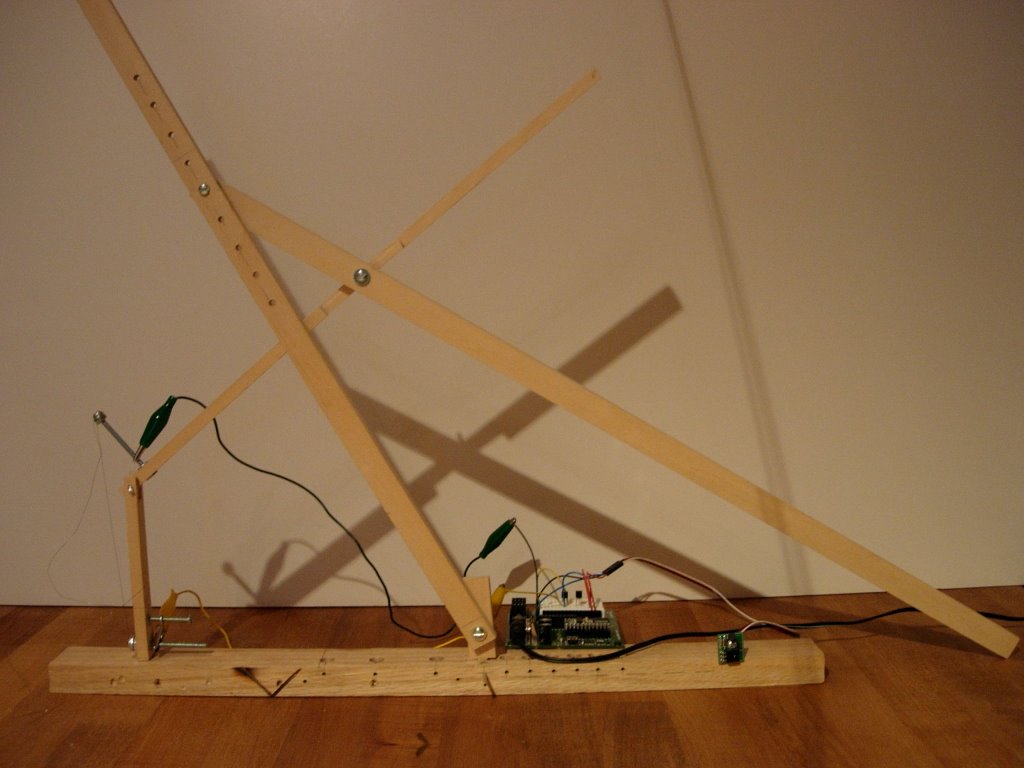
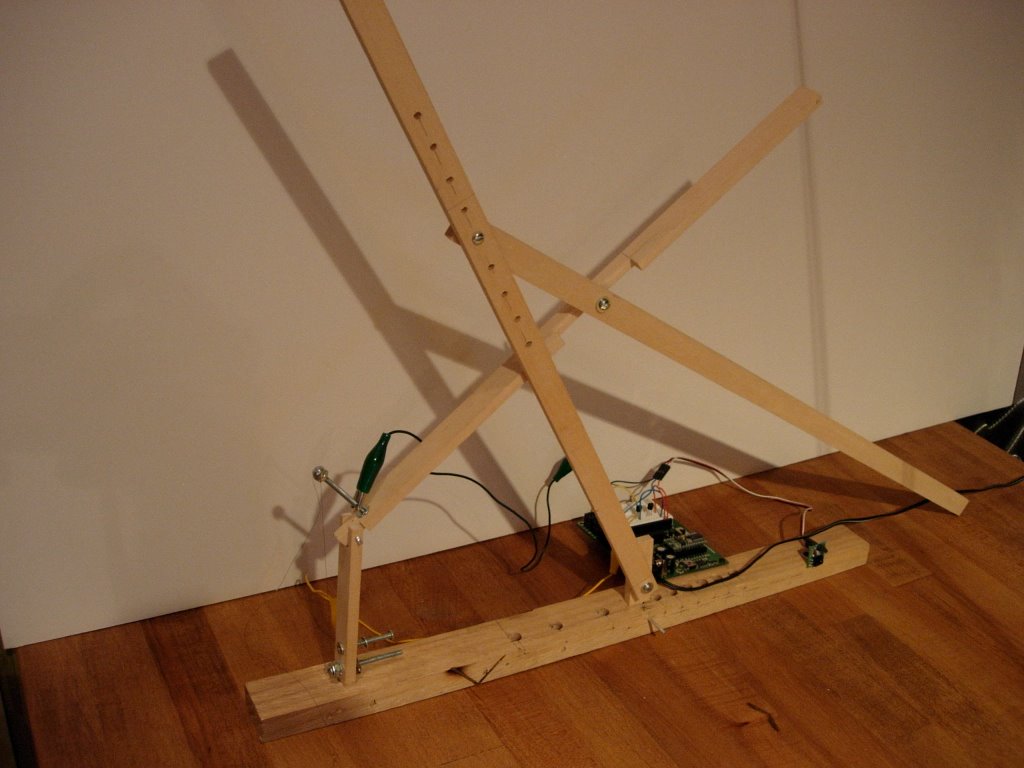
FINAL PROPOSAL: lever arm/membrane wall section

the "death match between lever arm and membrane" enacted with light.

the final model envisions itself at a 3' width, approx. 6" depth, and 3' height. the input will be received from infrared sensors. the processing will be on/off translated from detected movement. the output will be: lever arm deforming membrane. this deformation will follow to actuate aperture in the membrane wall. the wall interior is lit. light will reveal itself when movement is present.

the materials:
.010-.015 gauge flexinol (6"-12")
infrared sensor (2)
low power lamp
fiberglass rod (1/16"-5/32" diameter) (up to 3/4" for substructure)
silicone tubing (fda grade 3/32 x 7/32)
silicone sheet (commercial grade, red, durometer 40, 1/32")
stainless steel circular clamp
lightweight cardboard composite
silicone rtv adhesive
for rewiring breadboard:
irl520 mosfet
220 ohm resistor
external power source

both the lever arms and membrane will be structured off of a fiberglass rod substructure. an enclosure for the light will be constructed with light-weight cardboard composite.

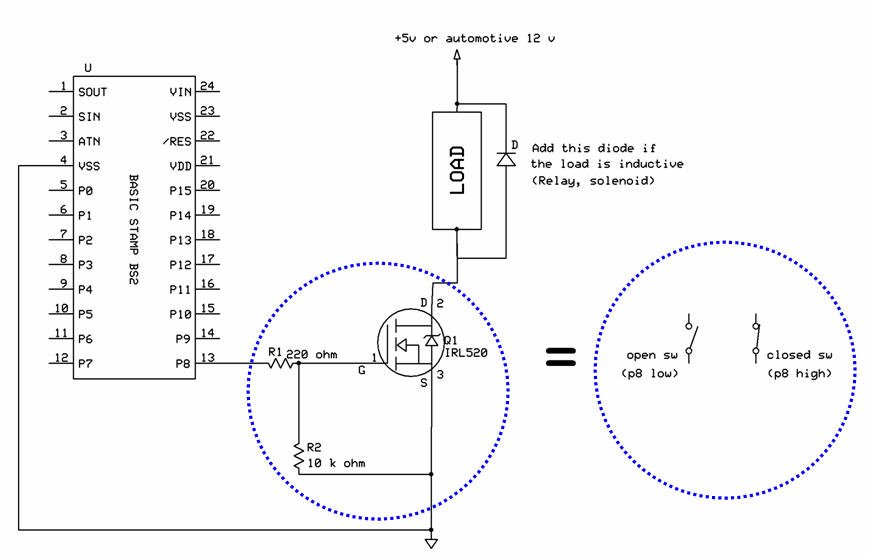
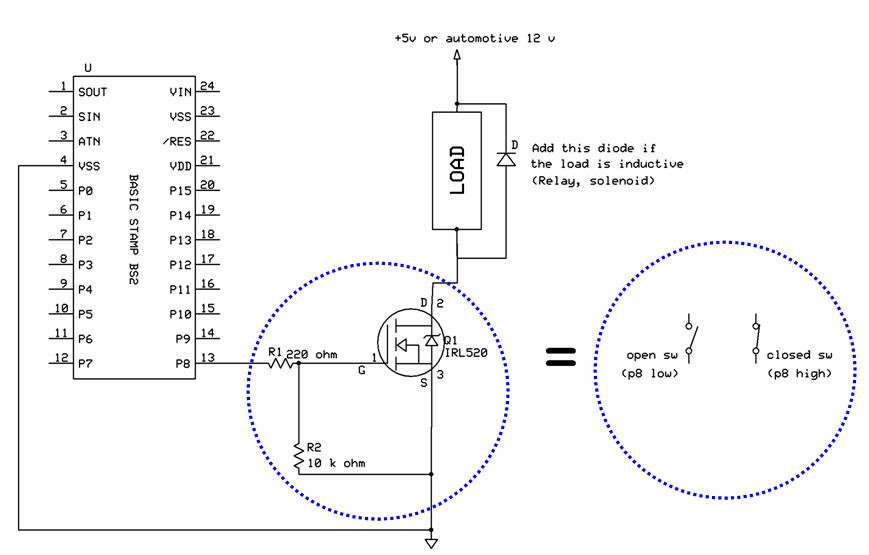
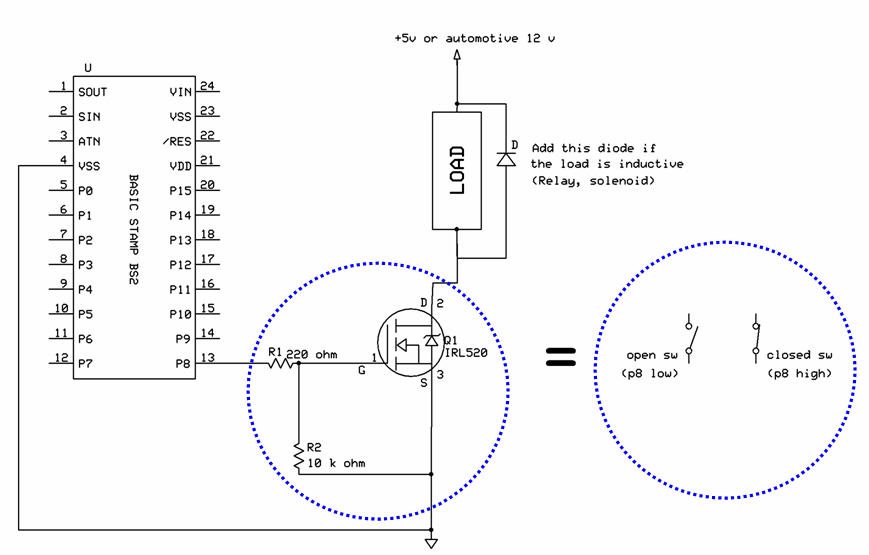
CRUX: the project will run four wires. the necessary ampere current will be achieved by rewiring the breadboard with the irl520 and including a 220 ohm resistor to protect the stamp i/o pin. the external power source has not yet been determined.
the below schematic illustrates the rewire. if anyone may shed light/offer technical support in instrumenting the new schematic-PLEASE OFFER ASSISTANCE. we would gladly repay you.

matthew & twain

Living Barcode

What is the linkage between the customer and supermarket?
What is the social issues of the supermarket?

From this simple question, I started to study the origin of the supermarket. At last
a barcode is the strongest item to research and I want to adopt this in my supermarket
issues. A barcode is a machine-readable representation of information in a visual format on a surface. Originally barcodes stored data in the widths and spacings of printed parallel lines, but today they also come in patterns of dots, concentric circles, and hidden in images. Barcodes can be read by optical scanners called barcode readers or scanned from an image by special software. This barcode system is very similar to our project-living architecture. On-OFF system of micro-controller is resembled to the barcode reading system(although there are some calculation in the scanner but I regret those things).

So I want to make a living barcode window(or shading system)to use supermarket which is
the main part of metropolitan. Recognizing the customer, understanding the goods are
enable with living barcode systems.

Input : Movement sensor (0-1-0 / Off - On - Off)
Processing : Recognizing the goods of foods
Output : Reminding to the customer what he gained

Reference : http://www.barcodeart.com/ (amazing site, catch it!)


Monday, April 10, 2006

Living Architecture-SP06-Pratt

Researched a fantastic information resource through Cornell that was recommended to me from one of our critics. Found what can be a solution to my joint issue. Will continue in bettering this point of my arm. Once this solution is completed the arm will be replicated to eight copies at 1/3rd smaller than the current size. Every third arm will be an active flexinol enhanced unit with a infra red sensor as per the original. In my cause the sensors will be acting as a carbon dioxide sensor within the confides of the triangulated structure of the arm apparatus. These envelopes will be representative of a Calatrava scale structure which when due to exceeding carbon dioxide levels from its occupants will actuate the sensors to varyingly open the structures points releasing the gases . On a micro scale this will be indicitave of the global effort to acknowledge global warming which is increasingly affected by increasingly rising carbon dioxide levels from a growing population as a facet amoungst numerous other catalysts.

David V. & Andre T.

Proposal:

For the final demonstration we will construct a scaled up version of the mock-up presented for the mid-term. We would like it to stand somewhere between two to three feet in height. Similar mechanisms that were used for the mid-term model will be used. The procedure of the apparatus will be:

INPUT: -Sensors detects movement

PROCESS: -Light turns on in tube; turning mechanisms are triggered depending on which sensor is activated.

OUTPUT: -Tube is turned in the direction of the movement, slits in tube open to let out light.

The light can be seen not only as a source of illumination, but also as a metaphor for a new manner of capturing certain needs of a building within a more controlled system. The light is only the first potential.

Our tube will be situated within a rectangular box made of MDF. The dimensions will be roughly 1.5’ x 3’. The tube will be fixed to both ends of the box. Diameter of the tube will be about 3”. Turning will be created with the use of two piano wires on the side of the box that will pull the tubes turn bars in a movement much the same as a fishing pole pulling up a catch; a linear to radial movement.

The slits within the tube will be opened by a flexinol wire that will be fixed to the inside wall of the tube, near to the slit. There will also be a second crimping point within the tube that will help created greater tension and angle so that the flexinol will be able to pull and open the tube with better ease.

We will have to overcome certain issues such as creating better power for the flexinol. Other than that issue, most other problems have been acknowledge and somewhat fixed. Such with the code, we decided to use the simplest codes; we are using the OnOff code with one if/then statement. The sensor will activate the code to pull/turn the tube bars, as well as activate the opening of the tubes. We consider that the exact activation of tube movement, and slit opening are not needed to coincide with exact real-time action, so long as what can be produced is the exact input/output of the turn and opening.


Saturday, April 08, 2006

Living Architecture-SP06-Pratt

I highly recommend this information source through Cornell. Especially for those who have mechanical aspects to their projects such as gears and arm linked movements. It can be a incredible time saver as opposed to trial & error construction sampling.

http://kmoddl.library.cornell.edu/index.php

Sunday, April 02, 2006


Parallax 2 x16 serial LCD plug-in for displaying time and date with DS1302 chip. An output at a specific time and date can be set without the display, but the time can not be read in the DEBUG terminal.

Price: $30

Try snychronizzing with computer clock for on screen display.

Tuesday, March 28, 2006


ELASTIC INVESTIGATION
This prototype is investigating the flexinols ability to stretch an elastic surface. Before testing a constrained surface we used rubber bands to test the tension necessary for significant movement.


OUTPUT: PROTYPE 3,4&5

PROCESSING : BASIC TIME-KEEPING CHIP


in the second prototype...

(this one is prior to the lattice work)

we experimented with working 2 wires simotaneously.

after the integration of the time chip is finessed, we will use 2 wires to modify the angle and direction of a plane.


Living Architecture-SP06-Pratt


One of the things that was interesting about the piano wire prototype with the standard motion sensor was the depth of field it could read. It's possible to take what can be considered an inadequacy and use to our advantage. Potentially our system can designed to respond to a distance sensitve condition, maybe a warning or signaling system of some sort.

Saturday, March 25, 2006


Tuesday, March 14, 2006

Interesting website : Kinetic Design Group (MIT)

Hey guys, check this web site. You can find very interesting ideas for the project.
I wonder some other guy upload this site address. But check again.

http://www.robotecture.com/kdg/

The goal is to create architectural solutions that can demonstrate responsive and intelligently active behaviors with respect to changing individual, social and environmental needs. Kinetic function is used as a technological design strategy for building types that are efficient in form, lightweight, and inherently flexible with respect to various contexts and a diversity of purposes. Intelligent kinetic systems arise from the isomorphic convergence of three key elements: structural engineering, embedded computation and adaptable architecture. Such systems shall serve as a practical means for inventing entirely new ways of developing spaces, and the designing and building environments that address dynamic, flexible and constantly changing needs.

"If architects designed a building like a body, it would have a system of bones and muscles and tendons and a brain that knows how to respond. If a building could change its posture, tighten its muscles and brace itself against the wind, its structural mass could literally be cut in half."
- Guy Nordenson

"If a building could mediate our needs and the environment outside:Its demand on physical resources could be slashed If it could transform to facilitate multi-uses:Its function would be optimized If a building could adapt to our desires:It would shape our experience."
- mafox

PROTOTYPE : Sol - Living Market


Generally, market was considered as a storage of foods and goods. However, Fixed

idea about market place should be changed as a living assistance to the human. For

this reason, this project would be a suggestion about living roof system or living wind

-ow system for the market place. This can be helpful to the foods storage system, cir

culation of the goods, and connection between the human and nature.

Living architecture should be an one part of our life.


case study : jakob_macfarlane_house


Prototype 1 : Open-Close slit / On-Off System


Each edge is jointed to the end of the block. It is anchored and operates as a pulling system.
I used fishing lines for support this sheet and inside of the sheet, there are two pins holding
flexinol wire. It operates just like a cross slit -similar to Tadao Ando's church of light'.-but
sometimes it stoped its movement. I don't know what is the problem. May be the problem
of a micro-controller setting. If anyone has a picture of wire-setting, please upload those
pictures. I'll really appreciate that.

Saturday, March 11, 2006

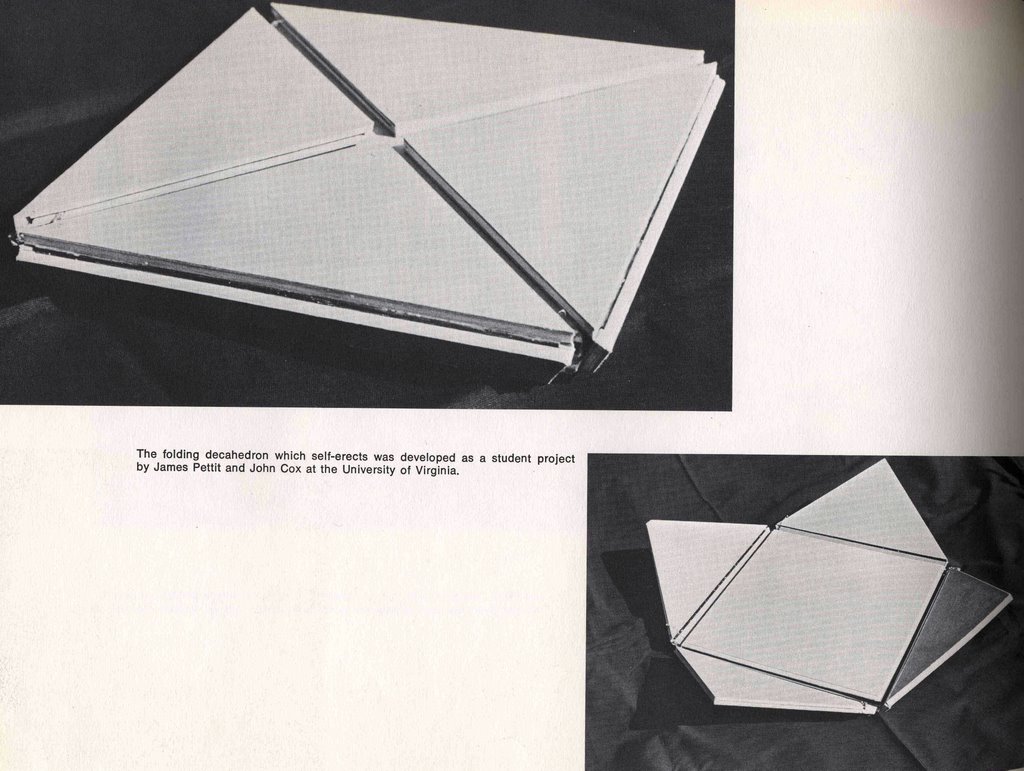
More scans of some projects found in Kinetic Architecture by Zuk/Clark


Friday, March 10, 2006
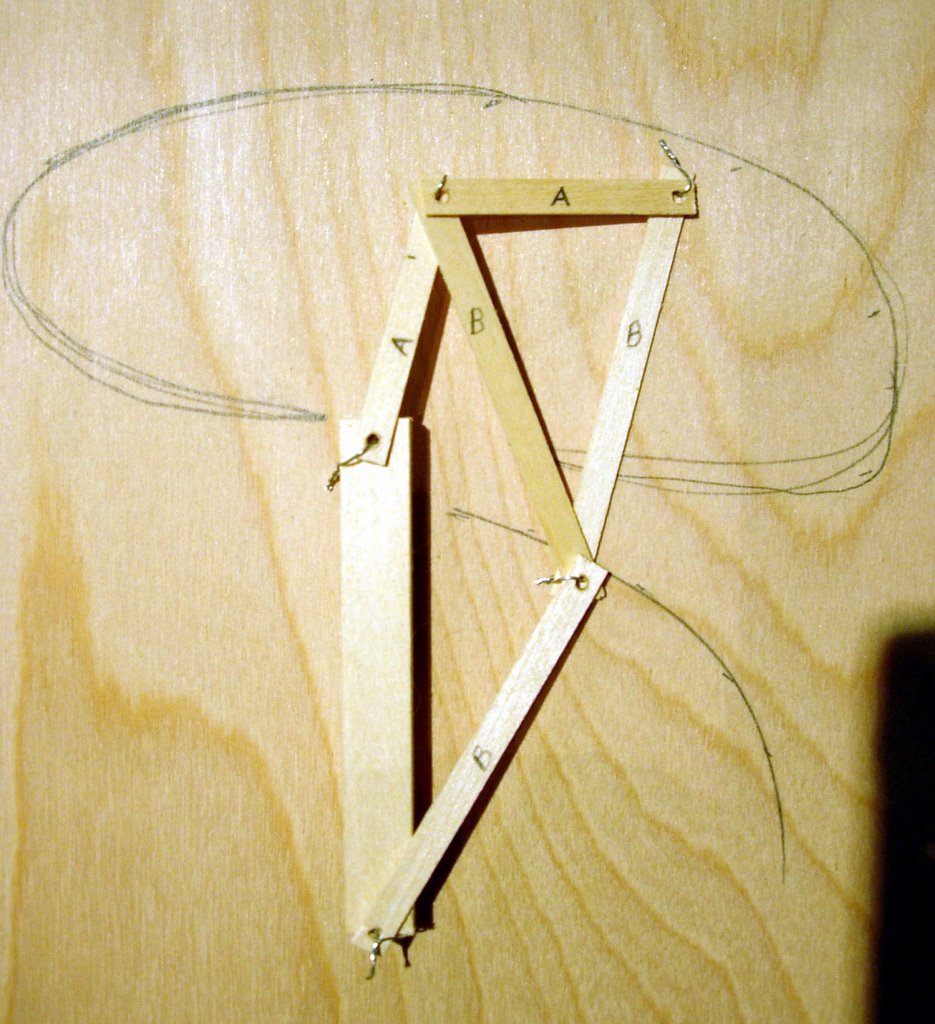
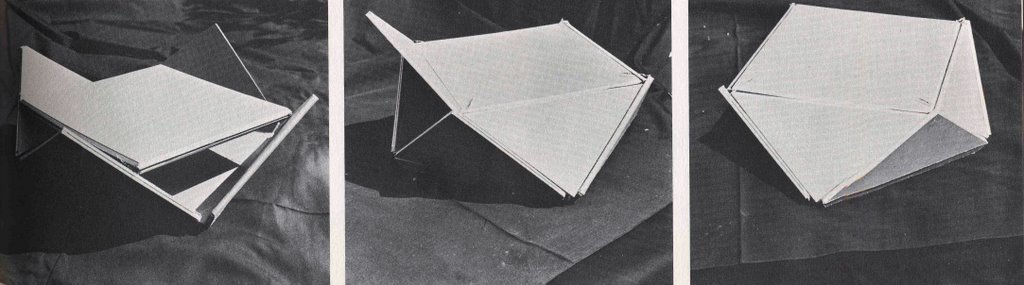
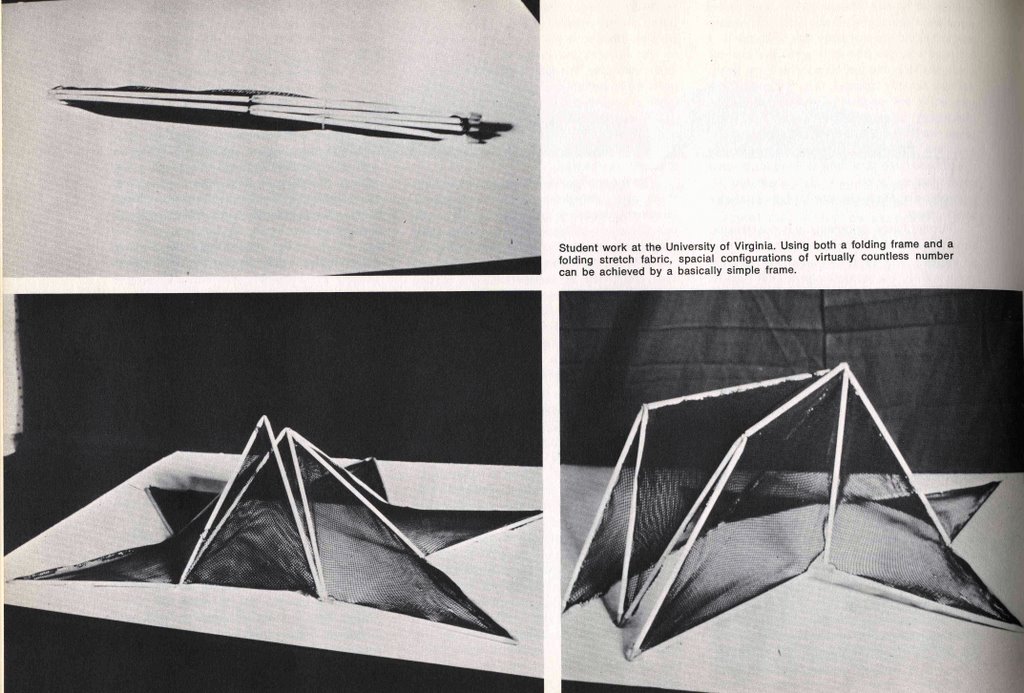
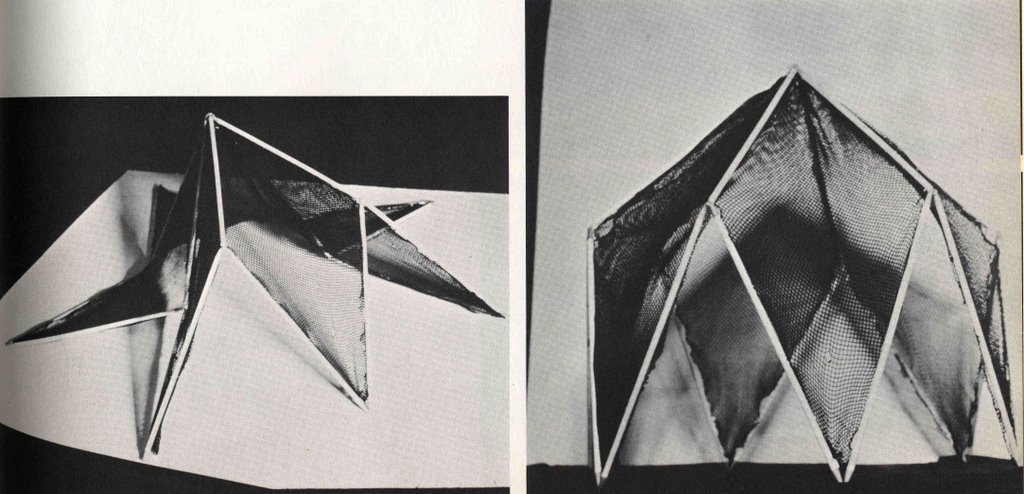
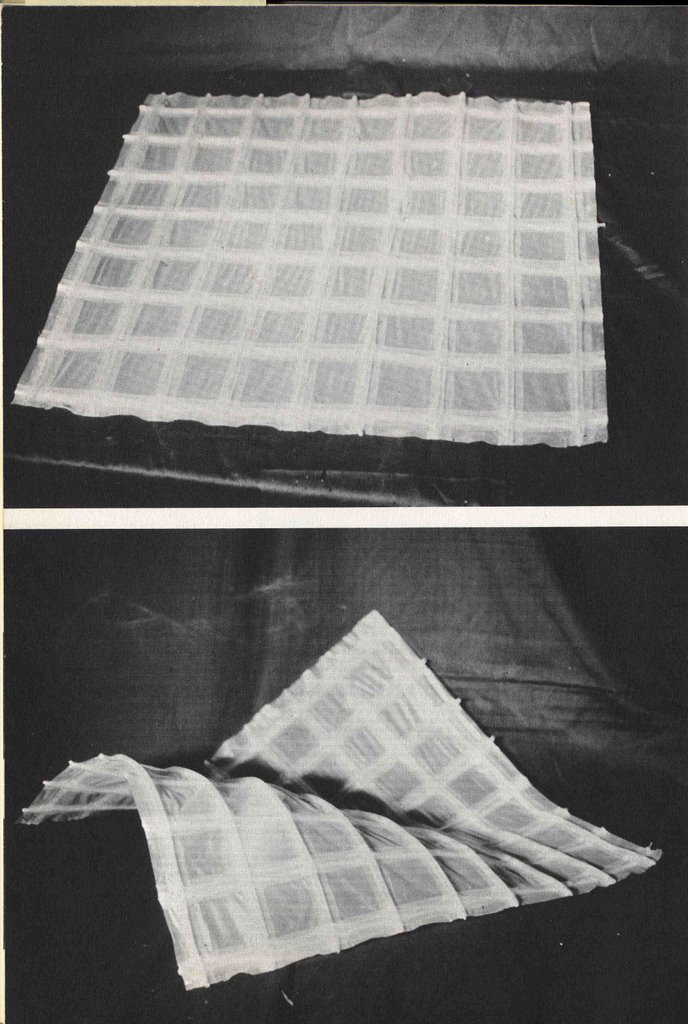
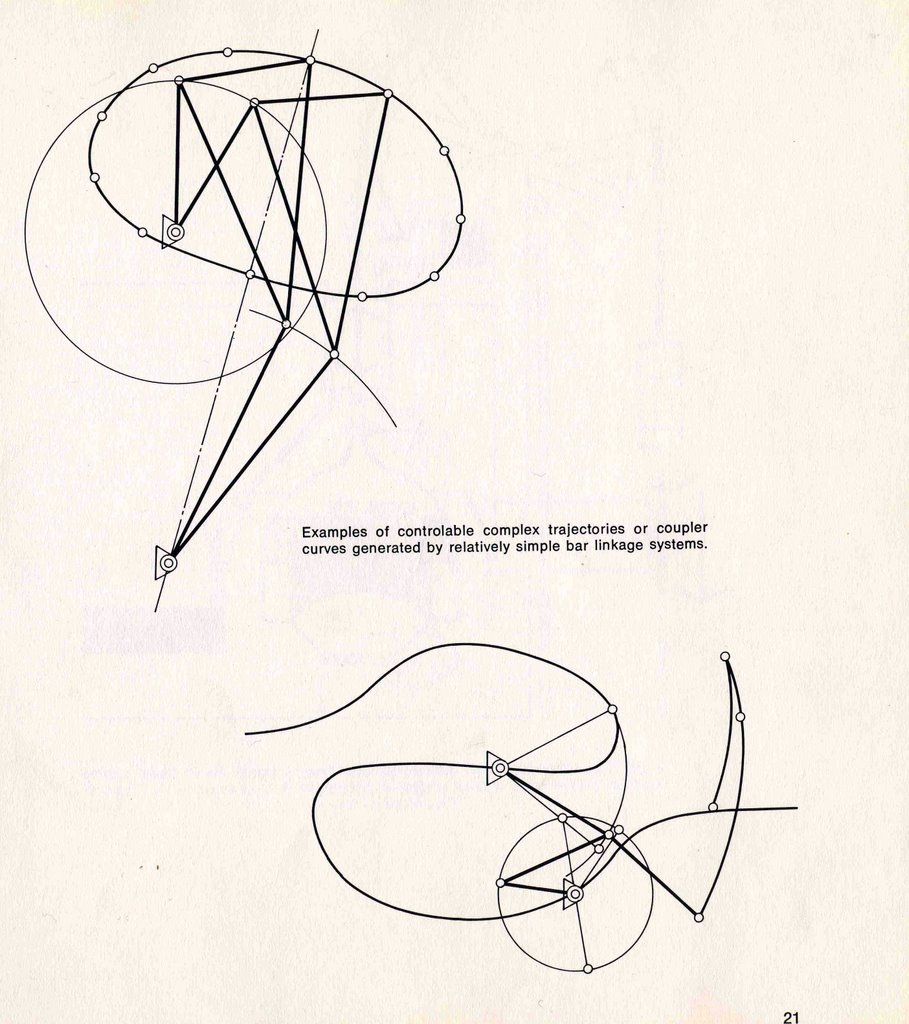
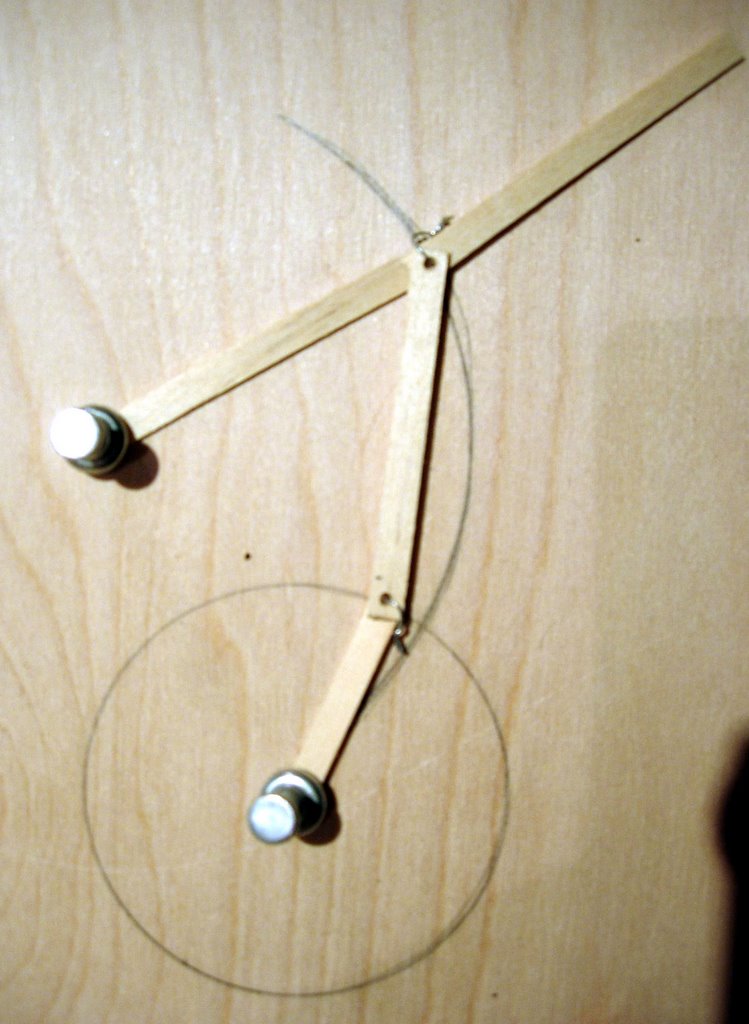
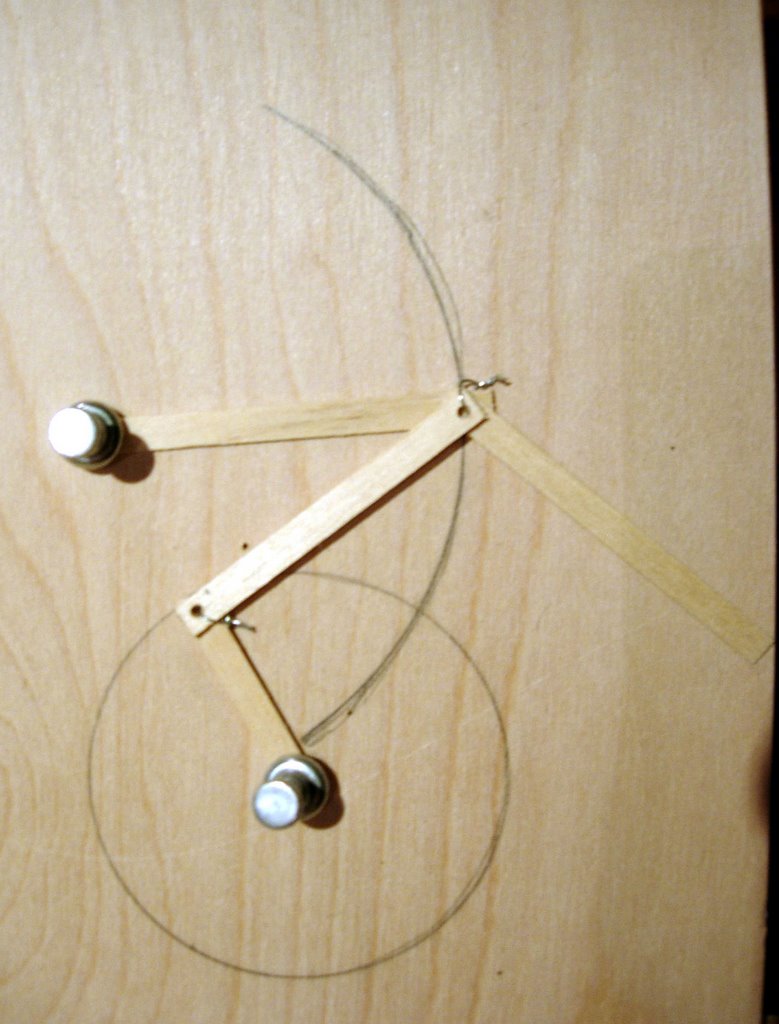
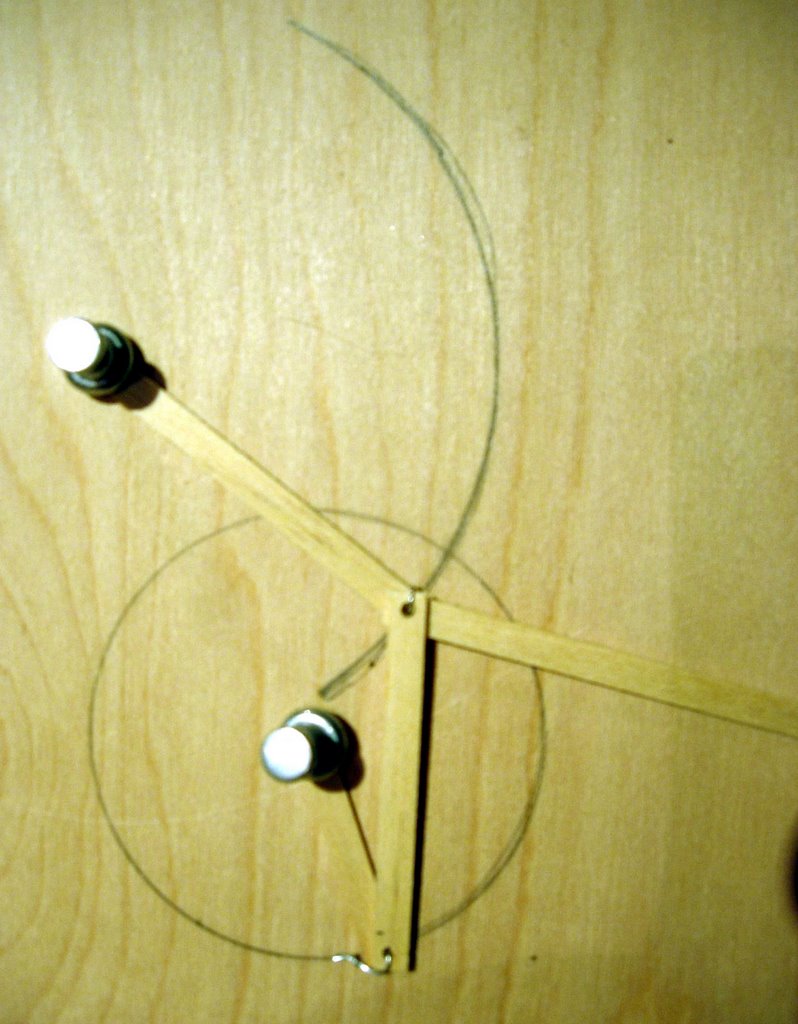
A seemingly obvious and though simple path of exploration stems from the limited range both in dimensional travel and pull force evident by our wonder wire. Immediate solutions came to mind with the uses provided by levers. To parallel this exploration, through the randomness of experience provided as part of Pratt's exposure, which permeates our lives, my design instructor brought in a book from which I have provided scans for your random experience.


Tuesday, March 07, 2006

yet another script . . .

This one continuously triggers one ouput and switches to a different output when the IR sensor is triggered. Enjoy

' {$STAMP BS2}
' {$PBASIC 2.5}
DIR0=1
S1 VAR Bit
Start:
FREQOUT 1,1,38500
S1=IN1
DEBUG 1,"SENSOR0=",DEC S1,CR
IF S1=1THEN
HIGH 4
ENDIF
PAUSE 3000
LOW 4
IF S1=0THEN
HIGH 12
ENDIF
PAUSE 5000
LOW 12
PAUSE 5000
GOTO Start

More Scriptage. . .

This one fires two simultaneously . . .

'{$STAMP BS2}
'{$PBASIC 2.5}
DO
HIGH 4
PAUSE 5000
HIGH 12
PAUSE 5000
LOW 4
PAUSE 5000
LOW 12
PAUSE 5000
LOOP

also instead of LOOP at the end consider AMEN.

(we do not in any way endorse christianity)

Hello All,

TheMillMaster & Uncle Rod would like you to all partake of our scriptage.

This is a script which can be used to alternately trigger two outputs:


'{$STAMP BS2}
'{$PBASIC 2.5}
DO

HIGH 4
PAUSE 3000
LOW 4
PAUSE 3000
HIGH 12
PAUSE 3000
LOW 12
PAUSE 3000
LOOP

Inspiration : Material Process_Young Architects 4_Princeton Architectural press

This book included very powerful images about kinetic architecture.

I'll upload scanned images of J. Meejin Yoon. (Page 124 - 149)

Check them.


Sunday, March 05, 2006

PROTOTYPE: MIKLOS

http://www.thelivingnewyork.com/LivingArchitecture/Miklos/Singular.mov

http://www.thelivingnewyork.com/LivingArchitecture/Miklos/Dual_movement.mov

PROTOTYPE: MATTHEW + TWAIN

http://www.thelivingnewyork.com/LivingArchitecture/Matthew+Twain/hanging_strip.mov

PROTOTYPE: MATTEW + PATRICK + FELICE

http://www.thelivingnewyork.com/LivingArchitecture/Matthew+Patrick+Felice/2006_02_17_277.avi

http://www.thelivingnewyork.com/LivingArchitecture/Matthew+Patrick+Felice/Livearch015.avi

http://www.thelivingnewyork.com/LivingArchitecture/Matthew+Patrick+Felice/Livearch016.avi

http://www.thelivingnewyork.com/LivingArchitecture/Matthew+Patrick+Felice/Livearch018.avi

PROTOTYPE: JESSE

http://www.thelivingnewyork.com/LivingArchitecture/Jesse/porter_proto4-1.MOV

http://www.thelivingnewyork.com/LivingArchitecture/Jesse/porter_proto4-2.MOV

PROTOTYPE: HANNAH + MICHAEL

http://www.thelivingnewyork.com/LivingArchitecture/Hannah+Michael/MVI_1840.AVI

http://www.thelivingnewyork.com/LivingArchitecture/Hannah+Michael/MVI_1842.AVI

http://www.thelivingnewyork.com/LivingArchitecture/Hannah+Michael/MVI_1844.AVI

http://www.thelivingnewyork.com/LivingArchitecture/Hannah+Michael/MVI_1845.AVI

PROTOTYPE: BECKY + GARY

http://www.thelivingnewyork.com/LivingArchitecture/Becky+Gary/DSCF0018.AVI

http://www.thelivingnewyork.com/LivingArchitecture/Becky+Gary/DSCF0024.AVI

Tuesday, February 28, 2006


This is from Hannah M and Mike C........they are unable to blog themselves.......

Monday, February 27, 2006

Hey monkey wrenches, holler at www.crg-industries.com to cop a free sample of dat shape memory polymer stuff called Veriflex. If you heat it to its activation temperature (70 Deg C), it will become plyable and can be cooled in its deformed state. Once cooled, that shite will stay put, keeping its shape until it is reheated, which will allow it to return to its original form. Rinse and repeat if desired.


Matthew Beary, Patrick Weise, Felice

Our micro-controller must have died in its sleep cause that shit ain't wakin' up. No sign of struggle or foul play though......but no worries, we jacked one from some kid while he was sleepi
ng......

Saturday, February 25, 2006

MATERIAL: SSIR SENSOR (DISCONTINUED IR SENSOR FROM PARALLAX)

You should be able to find the "old" sensor from our Prototype 1 assignement on a variety of other hobby robotics web sites.

Here is one listing:

http://www.hobbyengineering.com/H1469.html

MATERIAL: ALTERNATIVE SOURCE FOR PARALLAX PRODUCTS AND OTHER SENSORS

http://www.kitsusa.net/phpstore/index.php

INSPIRATION: BLOG FOR RESPONSIVE KINETIC LAB AT COLUMBIA

You can check out work from the Columbia students at:

http://lasp06c.blogspot.com/

Tuesday, February 14, 2006

Living Architecture-SP06-Pratt

Check out this website, if you may not have already and especially the second:

http://www.ics.uci.edu/~eppstein/junkyard/all.html
http://www.ics.uci.edu/~eppstein/junkyard/labtile/

Thursday, February 09, 2006

if anyone is interested in using a real time calendar the product can be ordered through parallax - ds1302.

for next week we (gary and becky) will be experimenting with getting two wires to work simotaneously, since the real time chip will not be in until next week...

Tuesday, February 07, 2006

DATA: flexinol technical chart provided by manufacturer

http://www.dynalloy.com/TechnicalData.html

Sunday, February 05, 2006

TUTORIAL: ROBOTBOOKS.COM

http://www.robotbooks.com/

INSPIRATION: STREAMSIDE DAY FOLLIES
by Pierre Huyghe

http://www.stage-directions.com/articles/dia.shtml


Friday, February 03, 2006

TUTORIAL: HOW TO MAKE ALMOST ANYTHING, MIT (2002)

http://www.media.mit.edu/physics/pedagogy/fab/fab_2002/help_pages/joepelectronicsprimer.htm

INSPIRATION: OMNIVISU

http://www.designberuehrtherz.de/projects.php?stud=19&proj=3&img=1&lang=de


INSPIRATION: KINETICUS

http://www.kineticus.com/


INSPIRATION: A+UDL, Stockholm

http://www.arch.kth.se/a-url/

Check out Terrarizer, Lemon Concerto, and Mediated Spaces (http://www.arch.kth.se/mediatedspaces/)

Thursday, February 02, 2006

INSPIRATION: EAMEX

Japanese EAP company
http://www.thelivingnewyork.com/lab/kurage.wmv
http://www.eamex.co.jp/index_e.html

EAPs in general have a wide range of motion. It can also be more precisely controlled.It's strength at this moment is significantly weaker than SMAs. (Shape Memory Alloy, like Flexinol)The first world arm wrestling challenge between human and robots using EAP actuated artificial muscle was held last year. This may indicate improvements in the strength of EAPs.


Wednesday, February 01, 2006

TIP: SCRIPT FOR ASSIGNMENT II

Hi Everyone,

Here is the script that Michael and I used for our second prototype:

' {$STAMP BS2}
' {$PBASIC 2.5}
DIR0=1
S1 VAR Bit
Start:FREQOUT 1,1,38500
S1 = IN1DEBUG 1,"SENSOR0=",DEC S1,CR
IF S1=0THEN
HIGH 2
ENDIF
PAUSE 1000
LOW 2
GOTO Start

Hope it helps,
Hannah

ASSIGNMENT 2: PROTOTYPE 2

http://www.thelivingnewyork.com/lab/LivingArch-Pratt-Prototype2.pdf

ASSIGNMENT 1: PROTOTYPE 1

http://www.thelivingnewyork.com/lab/LivingArch-Pratt-Prototype1.pdf

ASSIGNMENT 3: RESEARCH TOPIC

http://www.thelivingnewyork.com/lab/LivingArch-Pratt-ResearchTopic.pdf

TUTORIAL: LOW TECH SENSORS AND ACTUATORS FOR ARTISTS AND ARCHITECTS

by Usman Haque and Adam Somlai-Fischer

http://lowtech.propositions.org.uk/

INSPIRATION: USMAN HAQUE

http://www.haque.co.uk/

INSPIRATION: AETHER ARCHITECTURE

http://www.aether.hu/

POSSIBLE TOPIC FOR ADVANCED RESEARCH (OUTPUT): ELECTRORHEOLOGICAL FLUIDS

http://www.lce.hut.fi/publications/annualrep/node21.html

INSPIRATION: CASE STUDIES IN KINETIC ARCHITECTURE

by MIT KDG

http://kdg.mit.edu/Matrix/matrix.html

INSPIRATION: MICHAEL A. FOX ROBOTECTURE

http://robotecture.com/index.php?option=com_simpleboard&Itemid=40

INSPIRATION: HYPERBODY RESEARCH GROUP AT TU DELFT

Directed by Kas Oosterhuis

http://www.bk.tudelft.nl/live/pagina.jsp?id=f878960b-0ab5-4a32-bbe6-4e5e7e903887&lang=nl

INSPIRATION: SOLAR YARD LIGHT

Inexpensive off-the-shelf prduct that has a 'logic module' already set up. Could be interesting to hack into.
http://www.solarilluminations.com/acatalog/solar_floating_light.html

How solar yard light works
http://home.howstuffworks.com/solar-light.htm

MATERIAL: ELECTRONICS/ROBOTICS PARTS SHOP

http://www.digikey.com/
http://www.junun.org/MarkIII/Store.jsp


POSSIBLE TOPIC FOR ADVANCED RESEARCH (INPUT): PHOTORESISTOR

http://science.howstuffworks.com/question363.htm

MATERIAL: PARALLAX

http://www.parallax.com/

INSPIRATION: AA DRL

http://www.aaschool.ac.uk/aadrl/


TUTORIAL: BASICS OF ELECTROMAGNETICS

http://science.howstuffworks.com/electromagnet2.htm

POSSIBLE TOPIC FOR ADVANCED RESEARCH (OUTPUT): EAP

EAP Article in Wired
http://www.wired.com/wired/archive/12.03/start.html?pg=13

Manufacturer of EAP
http://www.environmental-robots.com/

TUTORIAL: BASIC ELECTRONICS TUTORIAL

http://www.electronics-tutorials.com/basics/starting-out.htm

TUTORIAL: BASIC TERMS OF MAGNETIC AND ELECTRIC ENERGY

http://www-istp.gsfc.nasa.gov/Education/FAQs2.html#q28

INSPIRATION: MIT RESPONSIVE ENVIRONMENTS GROUP

http://www.media.mit.edu/resenv/


TUTORIAL: MUSCLE WIRE PROJECT BOOK
by Roger G. Gilbertson


http://www.amazon.com/gp/product/1879896133/104-5247449-7695906?v=glance&n=283155

Tuesday, January 31, 2006

INSPIRATION: HEXALIFTER

http://jlnlabs.imars.com/lifters/hexalifter/index.htm
http://jnaudin.free.fr/lifters/tubular/index.htm
http://jlnlabs.imars.com/lifters/hexalifter/videos/hexalifter.rm
http://jnaudin.free.fr/lifters/tubular/LifterTest.wmv

TUTORIAL: PIR SENSOR

http://www.parallax.com/dl/src/prod/PIR-Demo-Code-V1.0.ziphttp://www.parallax.com/dl/docs/prod/audiovis/PIRSensor-V1.1.pdfhttp://www.scary-terry.com/itw/pirsensor/pirsensor.htm

This page is powered by Blogger. Isn't yours?